VinFast Plays the Long Game in the Race for EV Talent
As EVs become increasingly defined by software, batteries and intelligent technologies, automakers are discovering that one of their greatest competitive advantages may not lie in what they build, but in who they can develop to build it.
 |
For global automaker VinFast, that investment starts long before prospective employees submit their first job applications
Gone are the days when vehicles were purely products of manufacturing expertise. After more than a century of development, modern cars increasingly represent the convergence of software, artificial intelligence, automation, battery technologies and connectivity. But that transformation has created another race unfolding quietly across the industry: one for talent.
“Success in this era will be determined by the ability of OEMs and suppliers to secure and cultivate a workforce fluent in both hardware and software, capable of bridging traditional mechanical know-how with next-generation digital capabilities,” wrote one analysis of the automotive industry’s talent challenges.
That, however, also means automakers are no longer competing solely with one another, but with Silicon Valley giants and technology startups for the same software engineers, AI specialists, battery experts and highly-skilled technicians capable of bringing next generation vehicles to life.
A few figures offer a glimpse of the challenge. Germany’s automotive sector faced a shortfall of approximately 80,000 skilled professionals in 2024, while the United Kingdom reported over 14,000 vacancies in the automotive sector and only 27% of the workforce currently qualified to work safely on electric vehicles.
Some industry experts argue that this challenge cannot be solved through recruitment alone, and that talent development must begin much earlier than the hiring process itself.
“The companies that win will be those that start early, think creatively about recruitment, and treat talent development as a core strategic priority, not a secondary HR task,” the same analysis noted. “In an industry as competitive and fast moving as automotive, the true horsepower remains human.”
Which is why some automakers are scrambling to retool their workforces and build talent pipelines from the ground up. One company is investing EUR 400 million annually in workforce training, while another has committed £20 million each year to skills development programs focused on EV technologies and advanced manufacturing. Elsewhere, others are expanding their technology capabilities while developing digital talent pipelines of their own.
Building Engineers Before Hiring Them
For global automaker VinFast, that investment starts long before prospective employees submit their first job applications.
As a member company of Vingroup, Vietnam’s largest private conglomerate, VinFast benefits from a broader ecosystem spanning education, research and technology. In 2025, VinFast and VinUniversity, Vingroup’s non-profit university, established a strategic partnership focused on battery technologies and advanced materials, creating opportunities for students and researchers to participate in joint research projects, technical training and internships alongside VinFast experts.
Beyond the Vingroup ecosystem, VinFast has also entered into collaboration with 19 universities and higher education institutions nationwide to standardize training programs across disciplines including automotive engineering, mechatronics, electrical and electronics engineering, automation and information technology. The company provides hands-on training equipment and genuine technical repair materials while integrating EV repair modules covering battery systems, powertrains and diagnostic software into academic curricula.
Students will also have opportunities to undertake internships across VinFast’s manufacturing complexes and service workshops nationwide, with outstanding candidates prioritized for recruitment after graduation.
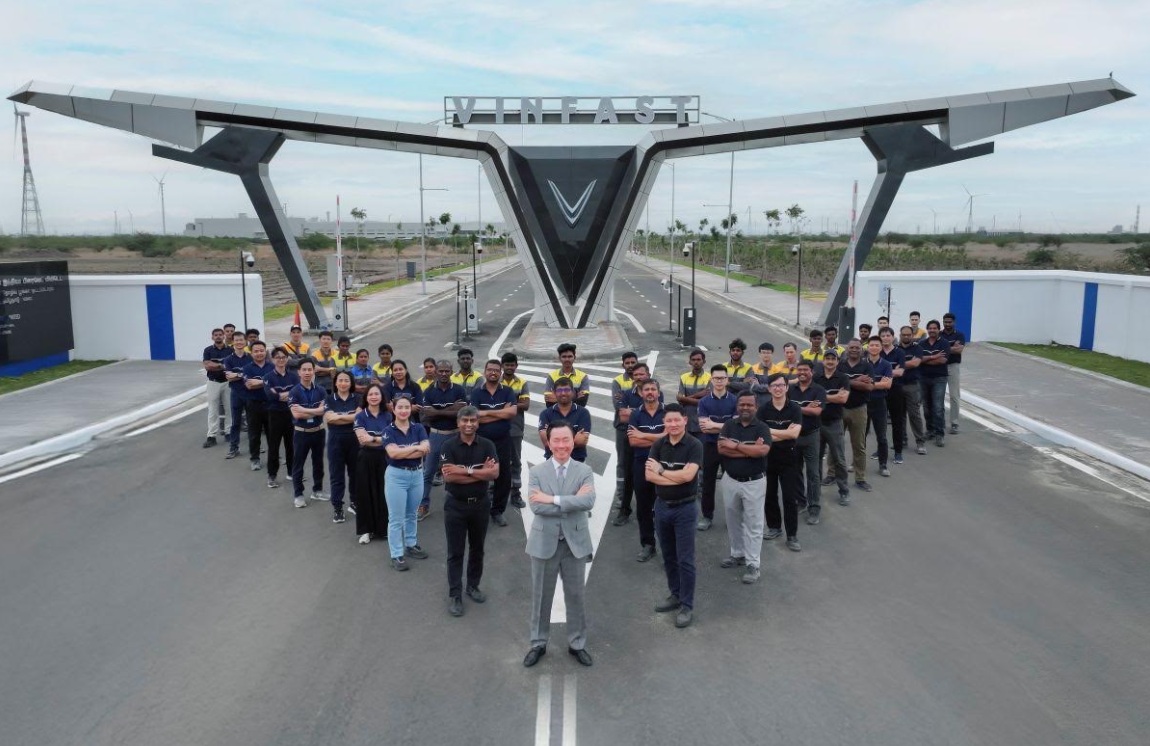
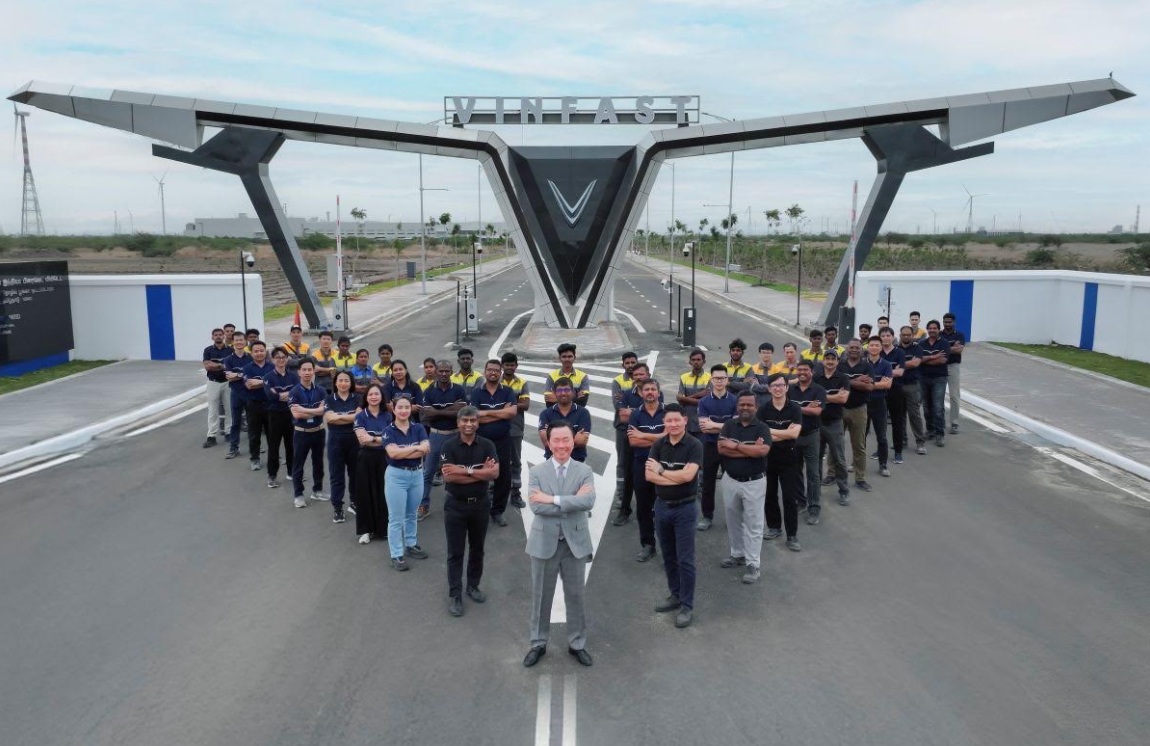
The approach extends to the markets where VinFast is building its overseas manufacturing footprint, with local talent development embedded alongside factory expansion. In India, the company has set a target of creating 3,000 to 3,500 direct jobs at its Tamil Nadu plant, with 80% of the workforce planned to come from local fresh graduates and trainees. Its first recruitment drive brought in 200 local professionals, with 344 diploma students taking part in the selection process through Tamil Nadu’s Naan Mudhalvan skilling initiative.
In Indonesia, VinFast’s Subang plant initially absorbed around 1,700 workers, while the company trained managerial staff in Vietnam for three to four months and brought Vietnamese experts to Indonesia to train local technicians. The facility is expected to expand as production scales, with the plant’s workforce and training pipeline growing alongside its planned capacity expansion.
Industry observer Phạm Minh believes the significance of such collaborations extends far beyond workforce development for a single company.
For an EV brand to develop sustainably, human resources must serve as a seamless ‘lifeblood’ across the entire value chain, from research and development, manufacturing and quality control to aftersales services, he noted.
In his view, standardizing EV education creates a generation of engineers sharing a common “technical DNA,” capable of mastering emerging technologies from the moment they enter the workforce.
Nguyen Van Viet, who has spent years researching transportation, believes what VinFast’s doing offers benefits beyond the company itself by helping narrow the gap between classroom education and the practical needs of industry.
“This model creates value for all three stakeholders: companies gain talent that meets their requirements, educational institutions are able to update their curricula based on real-world needs, and students gain access to more high-quality career opportunities,” he said. “More broadly, this approach will help establish a strong human capital foundation for Vietnam’s EV industry to develop sustainably for years to come.”
About VinFast
VinFast (NASDAQ: VFS), a subsidiary of Vingroup JSC, one of Vietnam’s largest conglomerates, is a pure-play electric vehicle (“EV”) manufacturer with the mission of making EVs accessible to everyone. VinFast’s product lineup today includes a wide range of electric SUVs, e-scooters, and e-buses.
VinFast is currently embarking on its next growth phase through rapid expansion of its distribution and dealership network globally and increasing its manufacturing capacities with a focus on key markets across North America, Europe, the Middle East and Asia.
Learn more at: vinfastauto.in.